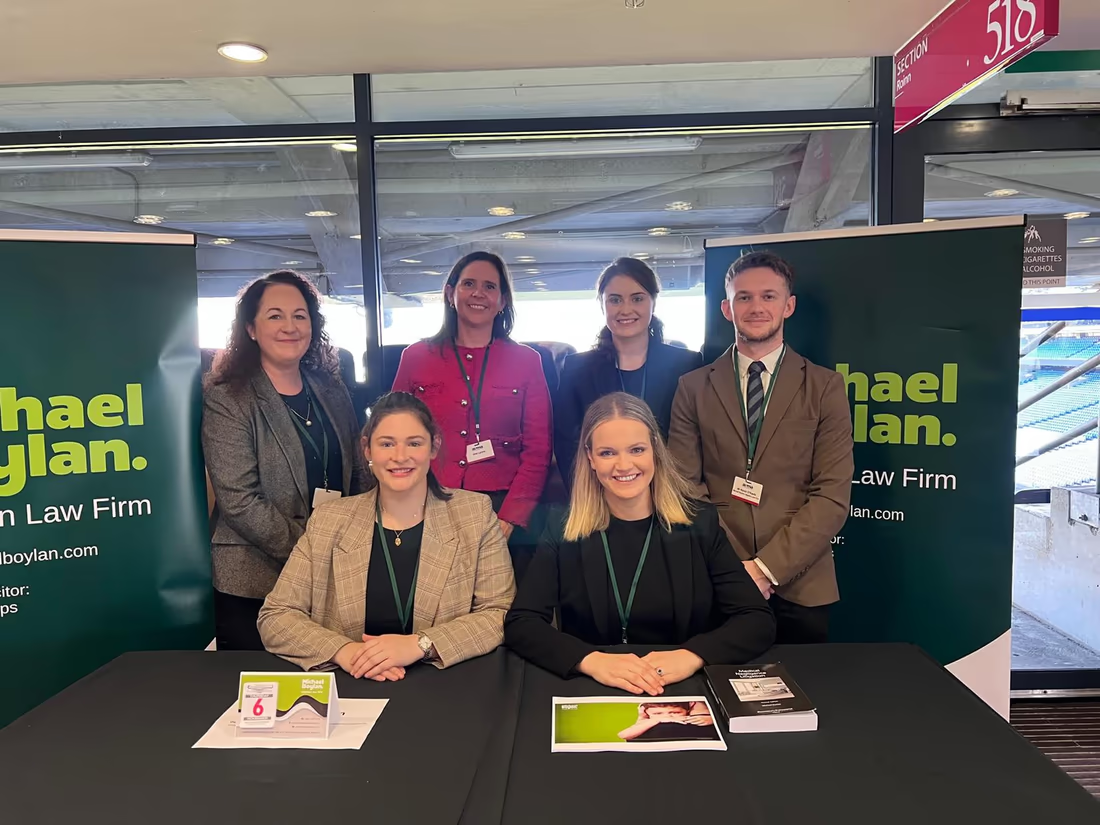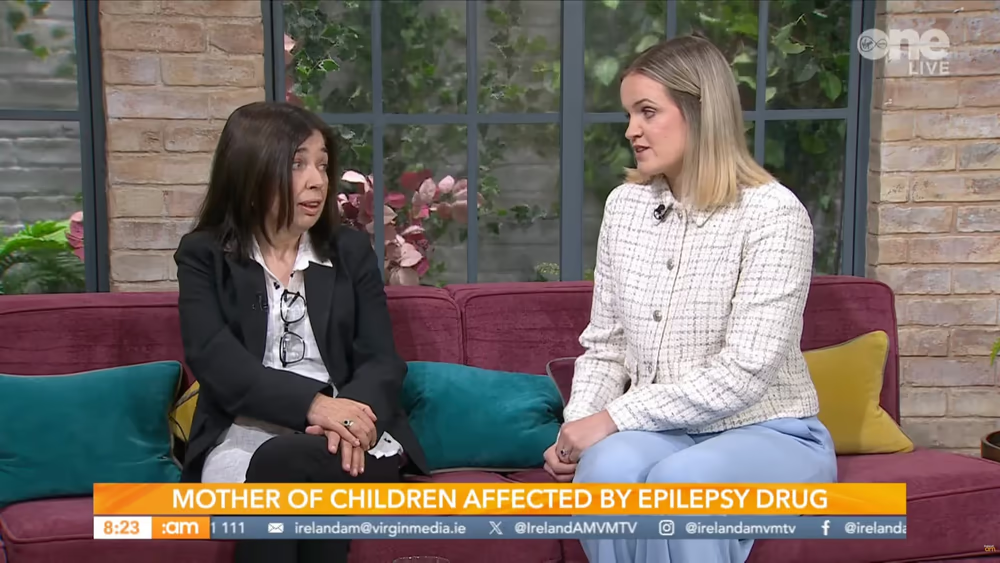

Michael Boylan Litigation's Principal Solicitor, Ciara McPhillips, appeared on RTÉ Prime Time to discuss the State Claims Agency: the body that manages and defends compensation claims brought against the State. It is an opponent this firm knows well. When a claim is brought against a public hospital, the HSE or the State itself, the State Claims Agency is the machine on the other side, and much of Michael Boylan Litigation's work over two decades has involved facing it.
**Watch the segment on RTÉ Player** (Ciara features from 17:22): "Chemical concerns: former Air Corps staff allege toxic exposure".
Who the State Claims Agency is
The State Claims Agency acts for the State whenever it is sued: by patients harmed in public hospitals, by people injured by State-run vaccination programmes, and by public servants injured in the course of their work. The Agency says it "seeks to act fairly, ethically and sensitively in dealing with people who have suffered injuries". The experience of many claimants, as the Prime Time programme showed, can feel very different.
What Prime Time reported
The programme examined the cases of around 20 former Air Corps personnel who are suing the State, alleging they were exposed to hazardous chemicals during their service without protective equipment or training. Former technician Gavin Tobin, whose case was lodged in 2014, spent more than eight years fighting for the safety records he needed: the High Court ruled in his favour in 2016, the State appealed, and it took a unanimous five-judge Supreme Court ruling in 2019, and a further High Court finding of non-compliance in 2023, before hundreds of safety data sheets were finally handed over. He sums up his experience of the process in three words: "Delay, deny, die."
In court documents seen by Prime Time, the State Claims Agency maintains that the defendants "at all times took reasonable care for the safety of the plaintiff and provided him with a safe system of work, proper equipment and proper training". Internal Air Corps documents reported by the programme tell another story: a 1992 health-and-safety report warned of "an increased risk of personnel contacting some form of industrial skin disease" after protective supplies ran out, and a 2014 report recorded that no training records existed for a carcinogenic solvent and that a single pair of gloves "was available to be used between all personnel".
Only one of the men, Gary Coll, has been compensated: a settlement of €2 million, with no admission of liability, eleven years after he lodged his case. Norman Spicer, a senior solicitor at Coleman Legal representing a number of the men, told the programme the State "will fight the cases tooth and nail". Mr Coll, once a national rowing champion, is now classified as disabled, with toxic damage to his central nervous system; his wife has become his carer.
The pattern we recognise
To lawyers who act against the State, the Air Corps story is familiar. This firm represented the majority of the people who developed narcolepsy after the State-run swine flu vaccination programme, recovering almost €80 million in damages for them, and it acted in the first sodium valproate cases against the HSE. In those campaigns too, claimants reported the State contesting cases at every step, and settlements arriving only years later, without admissions of liability.
The lesson of the programme, and of our own cases, is not that the State cannot be beaten. It is that claims defended by the State Claims Agency are hard-fought, slow, and demand persistence: rigorous expert evidence, readiness to litigate discovery battles all the way up if necessary, and clients who are supported through a process that can take years. Mr Tobin's Supreme Court win ("I beat them five nil," as he put it) shows the courts will hold the State to account when the case is properly made.
If you are facing the State Claims Agency
Most people meet the Agency at the worst moment of their lives: after an injury in a public hospital, a harmful State-run programme, or a workplace accident in State employment. Strict time limits apply to such claims, and the evidential groundwork matters enormously. Independent medical expert evidence, obtained early, is usually decisive. Whatever firm you choose, choose one that has taken the State on before.
Source: RTÉ Prime Time, "Chemical concerns: Former Air Corps staff allege toxic exposure", broadcast 26 February 2026 (Ciara McPhillips features in the segment from 17:22 to 20:44), available on RTÉ Player. Reporting by Paul Murphy; producer/director Sallyanne Godson.